Sunday, February 20, 2011

Tutorial 2, ISM3004: How to copy files onto a CD

Tutorial 2: How to Copy files onto a CD
by: Courtney Jeffries
ISM3004

Step 1: Insert a writable CD into your computer. A window will open up asking what you would like to do, click "Open writable CD folder" and OK.


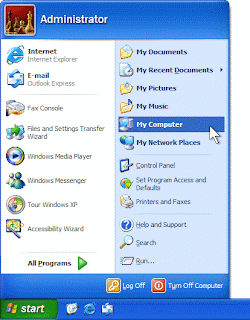
Step 2: There should be a folder window showing your blank CD; leave it open on the screen. Go to "Start" and then "My Documents". Right click on the files or folders you would like to copy and click "Copy".


Step 3: Go to the window containing your blank CD and click the "Edit" - paste.


Step 4: Once all of the files you want have been added to the window, go to "File" - "Write these files to CD". A CD writing wizard should pop up on the screen, give your CD a name and click "next".


Step 5: The CD wizard will begin to copy your files onto the CD. Once they have all been copied, click "Finish".


Sunday, February 13, 2011

Excel Project: ISM3004, Courtney Jeffries

Excel Project: ISM3004
by: Courtney Jeffries

While working through the excel assignment, there were many points where I wanted to give up because I got discouraged from not understanding something right away. Through further exploration of the excel discussions on the website however, I was able to find the answers to most of my questions and after a couple hours, completed the assignment.

One skill I became more familiar with during this project was using the various excel formulas. At first I kept getting confused on what formulas to use for each question but when I eventually figured them all out it was very relieving! Another excel item that I now feel comfortable with is the pivot table. Much like learning how to ride a bike or any other skill, once you know, you know! I was intimidated when we were first shown how to work through a pivot table but after a few practice tries, I now feel completely comfortable, almost as if I could fill one in with my eyes closed!

The only thing that still continues to confuse me is for the second pivot table we were asked to turn the decimals into percentages. When I proceeded to do that, my percentages went up to about 8,000 which clearly was not correct. I tried to go back and see where I could fix my mistake but I continued to get lost and just left the numbers as decimals since I procrastinated and have been working on the assignment for a few hours. Hopefully I did everything else correctly and will not lose too many points!

Here is the screenshot of my chart, even though the decimals are supposed to be percentages:


Sunday, January 30, 2011

Tutorial 1: ISM3004; How to use an External Hard Drive on your PC

How to use an External Hard Drive on your PC
by: Courtney Jeffries, ISM3004

First of all, an External Hard Drive is a hard disk placed outside of the computer case. This allows expandability even if a computer's drive bays are full, and also provides an easily removable form of mass storage with very large capacity (networkdictionary).


Here are some easy steps for using an external hard drive on your PC:

Step 1:
Connect the external hard drive to your computer and it will begin installing. You should then be alerted that new hardware was detected.


Step 2:
Your computer may ask you if you want to "allow" the new hardware. If so, register your hardware at this time.

Step 3:
Next try to run a simple test on your hard drive by creating a new document and saving it to the external hard drive. Once it has been saved, try opening the document from the hard drive. If you are able to open the document, your hard drive installation was successful and you can begin transferring original files from your internal hard drive onto your new external hard drive.


Works Cited:

"Computer and Networking Hardware Dictionary - E." Network Dictionary. Web. 30 Jan. 2011. <http://www.networkdictionary.com/hardware/e.php>.

Sunday, January 16, 2011

Tutorial 1, ISM3004: How to successfully install and run a program for microsoft

How to Successfully Install and Run a program for Microsoft
by: Courtney Jeffries, ISM3004

Step 1:
Before installing a program onto your computer there are a few basic things you need to make sure of. You first need to check to see if the computer matches the requirements that go along with the program you are trying to install. (Also something to remember is to close all other windows or programs you may already have opened on your computer, this will allow the new program to install in a more timely manner.)

Step 2:
Once the disk has been inserted into your computer, most software will automatically prompt to a setup screen. If this is the case, you will then click the "run" button to start the installation process.


If you do not immediately see the setup screen however, the disk may not include this feature, in which case you would:

  1. Click on "START" in the bottom left corner of the screen and open My Computer.
  2. Once in the my computer window, open the installation files drive. This drive will contain all your files.
  3. You will then see either a setup or install file. (If there is more than one file, look for the application file or check each until you find the one that begins with installation.) Double click on your file and the installation process of your program will begin.  

Source